
Obama Budget Ignores African-American Jobs Crisis

Campaign for America’s Future blogger Isaiah J. Poole writes about some hard truths in the African-American community that he hopes President Obama and the Democratic Party will keep in mind as they debate budget cuts in the coming weeks and months. He points out that Friday’s jobs report shows that more than one in eight African Americans is looking for a job — twice the white unemployment rate.

Citing a number of recent reports, Poole lays out what he refers to as a “crisis” in the African-American community warning the president and Democrats that they better start paying attention or suffer the consequences at the ballot box.

When President Obama formally unveils his fiscal 2014 budget on Wednesday, a lot of the progressive movement focus will be on his plan to cut Social Security benefits through a reduced cost-of-living adjustment called the “chained CPI.” But there will be another scandalous policy decision reflected in that budget as well, and this one is a sin of omission: There will not be an all-out effort to address the depression-level unemployment conditions among African Americans. MORE

Five Great Online Tools for Mining Public Records

This post first appeared on the Project On Government Oversight blog.

The homepage of the Recovery.gov website. The website was created under the Recovery Act to help Americans track government spending of Recovery funds, including contracts, grants and loans.

Thanks to our open records laws, you can find a treasure trove of information on the Web — everything from details about publically traded companies to where stimulus funds are going. You can even submit Freedom of Information Act (FOIA) requests online.

Take some time this week to educate yourself about the information and data available from government websites. Below are five great online tools that you can use to help hold government accountable.

FOIA Online

FOIA Online allows anyone to submit a Freedom of Information Act request online, track their request, and search past FOIA requests. Currently the Environmental Protection Agency (EPA), Department of Commerce, Federal Labor Regulations Authority, Merit System Protections Board, and the National Archives and Records Administration use FOIA Online.

One of the great things about FOIA Online is that you do not have to be registered to submit or search FOIA requests. This makes it incredibly easy for anyone to begin research into what is going on in different agencies and departments of the U.S. government.

Recovery.gov

Recovery.gov was established by the American Recovery and Reinvestment Act of 2009, commonly known as the “Stimulus,” and is managed by the Recovery Accountability and Transparency Board. It shows the distribution of all Recovery funds and how each agency is spending the money. Agencies involved must submit weekly financial reports that describe how the funds allotted to them are being distributed, and those who received contracts, grants, and loan awards of Recovery funds must submit similar reports four times per year.

Recovery.gov not only allows the public to view, research, and review the information, but it offers the ability to report suspected fraud, waste or abuse that relates to the Stimulus. MORE

Why Republicans Should Take on Inequality

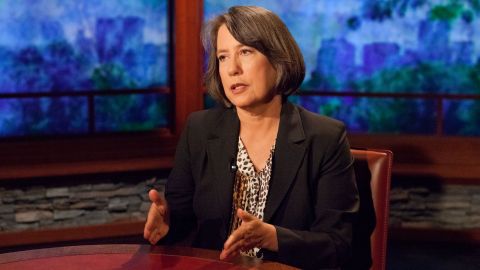
Sheila Bair on Moyers & Company.
(Credit: Dale Robbins)

In an op-ed published in The New York Times yesterday, Sheila Bair, the George W. Bush-appointed chairwoman of the Federal Deposit Insurance Corporation from 2006 through 2011, wrote that recent research by economist Emmanuel Saez should prompt Republicans to rethink their policies.

Saez studies income inequality in America, which reached a 90-year-high in 2007, immediately before the financial crisis. And Saez’s recent studies have found that, since 2009, inequality is again on the rise. The economy’s gradual recovery is only a recovery for the one percent: In the last two years, the richest Americans have seen their incomes grow by 11 percent, while the bottom 99 percent of Americans saw their incomes shrink by 0.4 percent. MORE

Watch ‘The Revisionaries’ on Independent Lens

Last year, we took a look at some of the proposed changes members of the Texas School Board had requested be made to textbooks used in the state’s schools. Because Texas has such a huge school system serving nearly 5 million schoolchildren, many of the textbook changes that get made in Texas end up making their way into school books across the country. Over 100 amendments were debated — many of which had a very clear conservative political agenda.

Later this week we’ll be hitting the books again with our guest, activist Zack Kopplin. The Louisiana native became alarmed when he realized that a law that passed the state legislature was making it easier to teach creationism in public schools. Kopplin wrote a research paper on the law when he was just 14 years old. He assumed someone else would take on the law. No one did. So Kopplin started a campaign to repeal the law. He worked with Sir Harry Kroto, a British chemist who shared the 1996 Nobel Prize in chemistry, to write a letter opposing the law that was signed by 78 Nobel laureates. He’s also drafted three bills, two of which have been introduced in the Louisiana state legislature. MORE

Mass Incarceration and the New Jim Crow

(AP Photo/David Goldman)

In the latest installment of his excellent New York Times series, Time and Punishment, John Tierney writes that mass incarceration trends of the past 30 years may have done more to harm crime-ridden communities and their residents than help them. As the number of prisoners has risen and the length of sentences has grown, Tierney writes:

The shift to tougher penal policies three decades ago was originally credited with helping people in poor neighborhoods by reducing crime. But now that America’s incarceration rate has risen to be the world’s highest, many social scientists find the social benefits to be far outweighed by the costs to those communities.

“Prison has become the new poverty trap,” said Bruce Western, a Harvard sociologist. “It has become a routine event for poor African-American men and their families, creating an enduring disadvantage at the very bottom of American society.”

Among African Americans who have grown up during the era of mass incarceration, one in four has had a parent locked up at some point during childhood. For black men in their 20s and early 30s without a high school diploma, the incarceration rate is so high — nearly 40 percent nationwide — that they’re more likely to be behind bars than to have a job.

According to a report from the Sentencing Project, a justice reform group, 75 percent of black males in Washington, D.C. can expect to go to prison or jail during their lifetime. Longer sentences mean many spend decades behind bars — well into middle and old age — even though studies have shown that the likelihood of committing a crime drops steeply once a man enters his 30s.
MORE

Analyzing the State of the Union Address

Did you watch President Obama’s State of the Union address last night? Here’s a roundup of articles and analysis that we found interesting this morning. In the comments section, share links to your favorite articles, as well as your thoughts about the speech, the president’s policy ideas and his priorities.

House Speaker John Boehner of Ohio listens at right as President Barack Obama gives his State of the Union address during a joint session of Congress on Capitol Hill in Washington, Tuesday Feb. 12, 2013. (AP Photo/Charles Dharapak, Pool)

House Speaker John Boehner of Ohio listens at right as President Barack Obama gives his State of the Union address during a joint session of Congress on Capitol Hill in Washington, Tuesday Feb. 12, 2013. (AP Photo/Charles Dharapak, Pool)


In State of the Union, Obama Presents a Powerful Progressive Agenda
“In the first State of the Union address of his second term, President Barack Obama sent a clear signal: He will vigorously pursue an unambiguous progressive agenda in his final years as president. Universal preschool, boosting the minimum wage, passing gun-safety legislation—Obama delivered a left-of-center demand list for Congress and his administration.” David Corn, Mother Jones MORE

The Fight to Curb a Consumer Watchdog

Barack Obama, Richard Cordray
Barack Obama and Richard Cordray. (AP Photo/Manuel Balce Ceneta, File)

A letter sent to the president at the beginning of February from 43 Senate Republicans promised, once again, to oppose Richard Cordray, his pick to head the Consumer Financial Protection Bureau, when he comes up for a confirmation vote. As one of four controversial recess appointments Obama made in January 2012, Cordray will need to pass a Senate confirmation vote at the end of the year — and maybe sooner — to stay in his job. But his precarious situation hasn’t kept Cordray from getting things done: Among other accomplishments, the CFPB has halted predatory practice by mortgage lenders and won an $85 million settlement with American Express.

From the beginning, Republican Senators have opposed the CFPB, a regulatory agency created by 2010′s Dodd-Frank legislation to protect the public from the kind of lending practices that contributed to the financial crisis. In May 2011, nearly all Senate Republicans signed a letter, promisingthey would block any nominee to head the bureau — by filibuster, if necessary — until key structural changes were made to the agency. Obama waited half a year for the Senate to vote on Cordray’s nomination before bypassing the Senate confirmation process with a recess appointment. At the same time, he appointed three nominees opposed by Republicans to the National Labor Relations Board. Last month, a federal appeals court ruled that Obama overstepped his bounds with the NLRB appointments, a decision that, if upheld by the Supreme Court, will likely extend to Cordray. Even if he is allowed to stay in his post, recess appointments only last for two years and Cordray’s will expire by the end of 2013. MORE

‘Rise of the Drones’

In case you missed it, last night’s episode of NOVA, “Rise of the Drones”, provides a fascinating look at the technology behind unmanned aircraft and the impact it will have on the future of warfare. Drones are about to become much more sophisticated (and probably more deadly) through the use of robotics and artificial intelligence. Watch it in advance of next week’s Moyers & Company, in which Bill will be speaking with Vince Warren and Vicki Divoll about the legal and moral implications of drone strikes, and, more broadly, civil liberties and executive power during a time of terrorism. MORE

What We’re Reading – Jan. 15, 2013

GOP Embraces Nuclear Gerrymandering: “It wasn’t so long ago, coming off a bruising presidential election, that Republicans were looking at ways to increase vote percentages among younger and minority voters to remain a contender in national elections. But it appears professional Republicans have decided that’s either impossible, unnecessary or perhaps just too hard. Because now they’re going for another possibility: rig the electoral college to insure Republican presidential victories with a decreasing voter base.” [Talking Points Memo]

It’s Not Just Partisanship That Divides Congress: “The House of Representatives is not just divided between the red and the blue. It also fractures along lines of white, black, and brown. Four-fifths of the House Republicans in the new Congress represent districts in which the white share of the voting-age population exceeds the national average, according to a new National Journal analysis. In a near-mirror image, almost two-thirds of House Democrats represent districts in which the minority share of the voting-age population exceeds the national average, the analysis found.” [National Journal]

Cuomo Signs Gun Legislation Into Law: “Gov. Andrew M. Cuomo signed into law on Tuesday a sweeping package of gun control measures, significantly expanding a ban on assault weapons and making New York the first state to change its laws in response to the mass shooting at a Connecticut elementary school.” [The New York Times]

Ingrid Michaelson accompanied by children from Newtown, Conn. and Sandy Hook Elementary school perform "Somewhere Over the Rainbow" on ABC's "Good Morning America" on Tuesday, Jan. 15, 2013 in New York. (Photo by Charles Sykes/Invision/AP)

Musician Ingrid Michaelson accompanied by children from Newtown, Conn. and Sandy Hook Elementary school perform "Somewhere Over the Rainbow" on ABC's "Good Morning America" on Tuesday, Jan. 15, 2013 in New York. (Photo by Charles Sykes/Invision/AP)

Guns in Churches, Psychiatric Evaluations, and Other State Laws Proposed Since Newtown: “In the month since the Newtown massacre, there has been an onslaught of state legislation related to guns—both to broaden, and restrict, owners’ rights. …here’s a roundup of ten measures being pushed around the country.” [The New Republic]

NRA Fights Campaign Finance Reform, Disclosure: “Best known for its fierce defense of the gun industry, its customers and a broad interpretation of the Second Amendment, the National Rifle Association (NRA) has also concerns itself with the First: namely, opposing limits on and disclosure of campaign contributions and expenditures.” [Sunlight Foundation] MORE

Aaron Swartz the Activist

Aaron Swartz at a Stop SOPA rally on Jan. 18, 2012. Photo by Daniel J. Sieradski, Creative Commons

At our staff meeting earlier today, Bill gave a heartfelt tribute to the programming prodigy and Internet activist Aaron Swartz, who took his own life on Friday at the age of 26.

At age 14, Swartz helped develop RSS, the now ubiquitous tool for syndicating Web content. He went on to found Infogami, which became part of the popular social news website, Reddit. He was instrumental in the founding of Creative CommonsDemandProgress.org and archive.org, and was well known in Web circles as a passionate advocate for a free and open Internet.

At the time of his death, Swartz was facing the possibility of up to 35 years in prison and $1 million in fines for illegally downloading millions of academic articles from JSTOR, a subscription-only service, which he allegedly intended to release to the public.

But it was Swartz’s political activism, and particularly his concern about the corrosive effects of money in politics, outlined in this post by Matt Stoller on naked capitalism that really struck Bill. MORE

Page 1 of 512345