Q&A

Q&A features interviews with writers, economists, social scientists, activists and other big thinkers with important perspectives on issues affecting our democracy.
Jose Antonio Vargas on Coming Out as an Undocumented Immigrant

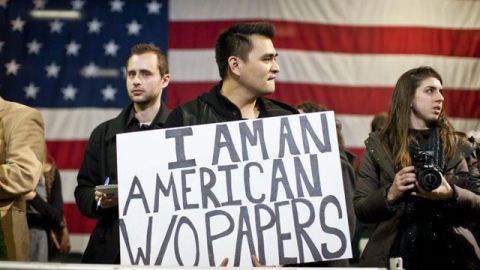
Jose Antonio Vargas at a Romney campaign event in Iowa in December 2011. Vargas, who had reported on Romney's 2008 campaign for the Washington Post, was asked to leave the event. (Brendan Hoffman/Prime)

Jose Antonio Vargas didn’t know he was an undocumented immigrant until, at 16, he tried to obtain a drivers license and was told by a D.M.V. clerk his green card was a fake. He kept his secret through high school, college, and several part time jobs. Soon after graduating, Vargas was hired by The Washington Post, where he contributed to the paper’s Pulitzer Prize-winning coverage of the Virginia Tech shootings. In many ways, the young Filipino immigrant had already achieved the American Dream — but he was still undocumented, and still felt like he was hiding.

In 2011, Vargas chose to speak out, sharing the story of his life as an undocumented immigrant in The New York Times — including details of using a fake passport to apply for a Social Security card and claiming full citizenship on his 1-9 employment eligibility forms. His “coming out” was inspired by a group of students who walked from Miami to Washington, D.C. to lobby for the Dream Act. The act would provide a path to permanent residency for young people like Vargas, who were brought to this country by their parents as children, were educated here, and, in many cases, know no other home.

We spoke to Vargas about the Dream Act, Arizona’s controversial immigration law, and his own personal status a year after his daring admission.

Lauren Feeney: Why do you think the Dream Act — which was introduced in 2001 and had widespread bipartisan support — been stalled for over a decade now?

Jose Antonio Vargas: The Dream Act was introduced in August 2001 and then the next month, the September 11th attacks hit. After that, Americans started to rethink the idea of strangers and foreigners — and rightfully so; we were just attacked. Everything immigration reform–related just got put by the wayside. George W. Bush — who was a border president — understood immigration and understood the importance of Latino voters and wanted some sort of reform. But in the politics of the post–September 11th world, it just became impossible. I read George W. Bush’s memoir a few months ago, and he says in the book that not passing immigration reform was one of the biggest regrets of his presidency. MORE

Occupy Activists Resurrect May Day for Americans

Unlike the rest of the world’s democracies, the United States doesn’t use the metric system, doesn’t require employers to provide workers with paid vacations, hasn’t abolished the death penalty, and doesn’t celebrate May Day as an official national holiday.

Outside the U.S., May 1 is International Workers’ Day, observed with speeches, rallies, and demonstrations. Ironically, this celebration of working-class solidarity originated in the U.S labor movement in the United States and soon spread around the world, but it never earned official recognition in this country. Since 2006, however, American unions and immigrant rights activists have resurrected May 1 as a day of protest. And this year, in the wake of Occupy Wall Street and the rebirth of a national movement for social justice, a wide spectrum of activist groups will be out in the streets to give voice to the growing crusade for democracy and equality.

The original May Day was born of the movement for an eight-hour workday. After the Civil War, unregulated capitalism ran rampant in America. It was the Gilded Age, a time of merger mania, increasing concentration of wealth, and growing political influence by corporate power brokers known as Robber Barons. New technologies made possible new industries, which generated great riches for the fortunate few, but at the expense of workers, many of them immigrants, who worked long hours, under dangerous conditions, for little pay.

A flier notifying people of a rally in support of striking workers at Haymarket Square in Chicago. The demonstration is considered the origin of the May 1 labor holiday.

MORE

Oran Hesterman on Reforming the American Food System

Some of you may remember the 2008 interview Bill did with author and food activist Michael Pollan on Bill Moyers Journal. It’s still one of the most popular videos on the website. Pollan’s movie, Food, Inc., had premiered at the Toronto Film Festival a few months earlier, and he had just published an open letter to the newly elected president in The New York Times magazine – “Farmer in Chief” – asking that food be made a priority. The problems plaguing America’s food system were beginning to gain national attention.

Oran Hesterman was watching that Journal broadcast with great interest. Hesterman is the director of the Fair Food Network, a nonprofit headquartered in Southeast Michigan whose mission is to make healthy, fresh and sustainably-grown food accessible to everyone.

Riley: You write in your book, Fair Food, that you found Pollan’s response to Bill’s question about what people can do to make a difference — Pollan said “plant a garden” — a missed opportunity. The food movement has made some progress since then. What you would say now in answer to the question: “What can non-farmers do to help reform the nation’s food system?”
Oran Hesterman
Hesterman: I wrote the book because I’m convinced it’s time for us to elevate the conversation about the food system to solutions; we understand that the food system is broken in ways that are creating food deserts and diet-related illness and environmental problems, and farm workers and food workers who are living in deplorable conditions. We don’t need to spend a lot more time detailing all the problems.

So if I was asked by Bill Moyers today what’s the one thing that people can do to make a difference, I would say the most important action is to make the shift from conscious consumer to engaged citizen. And what I mean by that is for us to stop thinking that by simply eating local and organic and focusing on our own diet that we’re going to change the system, but instead to expand that and realize that no matter where we live, work, play or worship, we have opportunities to shift the system on a larger scale. MORE

Is the ‘War on Mothers’ Really A War on Working-Class America?

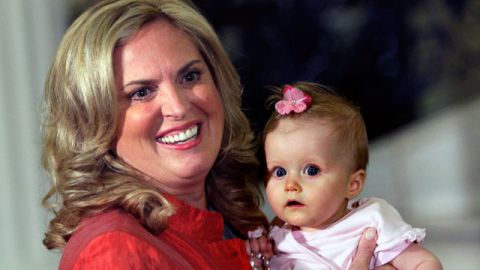
From the battle over birth control to Wisconsin governor Scott Walker’s repeal of the state’s Equal Pay law, conservatives have been seen as assailing women’s hard-won rights this campaign season. Then, last week, Democratic strategist Hilary Rosen said Mitt Romney’s wife Ann, a mother of five, had “never worked a day in her life.” The statement was seen as an attack on traditional stay-at-home moms, and war was officially declared.

We reached out to Stephanie Coontz, Director of Research and Public Education for the Council on Contemporary Families, to learn more about the realities behind the rhetoric of American women balancing work and life.

Lauren Feeney: Is there a “war on women” being waged this campaign season? A “war on mothers”? Both?

Stephanie Coontz: I try to avoid hyperbole, so I would say it’s more like guerilla campaign of harassment and attrition, conducted on two fronts.

One, the attack on contraception, is a classical guerilla sniping attack, because it is picking off the most vulnerable people. Most of us who are professionals, who are employed, who have some resources, are going to be able to find contraception. But unemployed women, women who are impoverished, with less education, are really vulnerable to attacks on reproductive rights. MORE

Excerpt: Winning on Social Issues, Losing on Economic Ones

Excerpted from the final chapter of The Cause: The Fight for American Liberalism from Franklin Roosevelt to Barack Obama, a just-released book by Eric Alterman.

One could not help but be struck by the dramatic turns in the summer months of 2011. As President Barack Obama found himself forced to begin the dismantlement of some of the most significant accomplishments of the New Deal and Great Society merely to entice his political opposition to agree to allow the U.S. government to pay its debts, the New York governor, Democrat Andrew Cuomo — son of former governor Mario Cuomo — was simultaneously concluding a remarkable run of legislative victories in what had famously been one of America’s most dysfunctional state legislatures.[ii]

The most significant of these was New York’s new law legalizing gay marriage. To win the necessary votes, Cuomo turned to top-dollar Republican donors who, according to a New York Times report, “had the influence and the money to insulate nervous senators from conservative backlash if they supported the marriage measure.”[iii] It was a thrilling moment, not only for gays, but for liberals looking for a leader who refused to be cowed by the scare tactics of conservative Christians.[iv]

New York Gov. Andrew Cuomo, center, after signing into law a bill legalizing same-sex marriage, Albany, N.Y., Friday, June 24, 2011. (AP/Mike Groll)

Andrew Cuomo was no radical, however — the law was, in fact, popular with more than 60 percent of New Yorkers polled — and the respective roles he undertook as governor provided a picture-perfect incarnation of the transformation of American liberalism from its New Deal origins. Under Roosevelt’s presidency, liberalism became a political movement focused on improving the lives of working people and those who needed a helping hand from government. In Obama’s America (and Cuomo’s New York), however, liberalism was primarily a movement designed to increase social and cultural freedoms for those who could afford to enjoy them. Cultural liberalism, while not without political risk, did not cost the wealthy anything or restrict their ability to become even wealthier. As such, it proved a far easier sell in a political system like that in the United States in the twenty-first century, dominated, as it was, by the power of money. MORE

Van Jones on Being a ‘Post-Hope Democrat’

Van Jones

Photo Credit: Zach Gross

Van Jones is perhaps best known as the former green jobs adviser to President Obama who was accused by Glenn Beck of signing a petition saying President Bush was responsible for the 9/11 attacks. Although Jones said he wouldn’t knowingly have signed it, he wasn’t sure whether or not he had by mistake. Jones resigned his position at the White House after six months, giving up, he writes in his new book, “the best job I ever had.”

We caught up with Jones over the phone to talk about Rebuild the Dream, the organization he started in June 2011 to advocate for economic justice; his new book (with the same title) which hit shelves this month; and the strategy he hopes will help progressives win in Washington this winter.

MORE

What the Candidates’ Kick-Off Speeches Really Tell Us

Kathleen Hall Jamieson is the Director of the University of Pennsylvania’s Annenberg Public Policy Center and our favorite expert to help us decode political rhetoric and communications on the campaign trail.

We asked Jamieson to look at much talked-about speeches made last week by President Obama and his presumed opponent Mitt Romney at the annual convention of the American Society of Newspaper Editors, and share what struck her about their rhetorical choices. Below are Jamieson’s thoughts.

On Hidden Agendas

President Barack Obama speaks at The Associated Press luncheon in Washington, Tuesday, April, 3, 2012. (AP /Pablo Martinez Monsivais)

President Obama and Governor Romney each accused the other of trying to obscure or conceal key actions that would be taken if elected.

For Governor Romney, the hidden agenda involved foreign policy; for President Obama, it was the Republican budget proposal (a.k.a. the Ryan budget). President Obama characterized the congressional Republican budget as “a Trojan horse” that “disguised” a “radical vision” of the country as “deficit reduction plans.” Governor Romney said that remarks President Obama made to Russian President Medvedev, captured on an open microphone, called the incumbent Democrat’s “candor into serious question” and added, “He does not want to share his real plans before the election, either with the public or with the press…. He is intent on hiding.” MORE

Subsidizing the Most Profitable Industry on Earth

(AP Photo/Pat Wellenbach)

This piece first appeared on TomDispatch.com.

Along with “fivedollaragallongas,” the energy watchword for the next few months is: “subsidies.” Last week, for instance, New Jersey Senator Robert Menendez proposed ending some of the billions of dollars in handouts enjoyed by the fossil-fuel industry with a “Repeal Big Oil Tax Subsidies Act.”  It was, in truth, nothing to write home about — a curiously skimpy bill that only targeted oil companies, and just the five richest of them at that. Left out were coal and natural gas, and you won’t be surprised to learn that even then it didn’t pass. MORE

Whose Corporations? Our Corporations!

This piece originally appeared on Alternet as part of a special five-part series analyzing the foundations, history and purpose of the corporation.

Historically, corporations were understood to be responsible to a complex web of constituencies, including employees, communities, society at large, suppliers, and shareholders. But in the era of deregulation, the interests of shareholders began to trump all the others. How can we get corporations to recognize their responsibilities beyond this narrow focus? It begins in remembering that the philosophy of putting shareholder profits over all else is a matter of ideology which is not grounded in American law or tradition. In fact, it is no more than a dangerous fad.

The Myth of Profit Maximizing

“It is literally – literally – malfeasance for a corporation not to do everything it legally can to maximize its profits. That’s a corporation’s duty to its shareholders.”

Since this sentiment is so familiar, it may come as a surprise that it is factually incorrect: In reality, there is nothing in any U.S. statute, federal or state, that requires corporations to maximize their profits. More surprising still is that, in this instance, the untruth was not uttered as propaganda by a corporate lobbyist but presented as a fact of life by one of the leading lights of the Democratic Party’s progressive wing, Sen. Al Franken. Considering its source, Franken’s statement says less about the nature of a U.S. business corporation’s legal obligations – about which it simply misses the boat – than it does about the point to which laissez-faire ideology has wormed its way into the American mind. MORE

The American Heroes of Social Justice

Peter Dreier is the author of the upcoming book The 100 Greatest Americans of the 20th Century: A Social Justice Hall of Fame, available in June. The book profiles progressive leaders who “have fought to make the United States a more humane and inclusive country” and won — on issues from women’s suffrage and civil rights to the eight-hour work day and the federal minimum wage. (Full disclosure: Bill Moyers is one of the hundred.)

Lauren Feeney caught up with Dreier – a professor at Occidental College – and asked him how and why he compiled the list.

Peter Dreier: The book is about the people and the movements that have made America a better country. It includes profiles of organizers, activists, writers, thinkers, artists, musicians, judges, and politicians. I consulted with many historians, journalists, political scientists, biographers, and others to come up with the list, but the definition of “greatest” was mine. To me, the “greatest” Americans are those who played key roles in the struggles for a more just and decent society. So folks like Rush Limbaugh, Glenn Beck, and Ann Coulter won’t agree with my list. Henry Ford, Charles Lindbergh, Walt Disney, and Ronald Reagan were “great” in their own ways, but they certainly didn’t challenge the rich and powerful to bring about more democracy and equality. In fact, each of them were on the other side of those battles.

Pete Seeger performs at the Highlander Research and Education Center. The little school tucked away in the east Tennessee mountains was once at the center of the struggle for civil rights. (AP Photo/Tennessee State Archives)

I’ve included some well-known people like Martin Luther King; Rachel Carson, the woman who inspired the environmental movement with her book Silent Spring;  Supreme Court Justices Louis Brandeis, William O. Douglas, William Brennan, and Earl Warren; union organizers Walter Reuther and Cesar Chavez, and three Roosevelts — Theodore, Franklin, and Eleanor.

But then there are people that a lot of Americans don’t know anything about at all. Tom Johnson, the progressive mayor of Cleveland; Ella Baker and Bayard Rustin, behind-the-scenes organizers in the Civil Rights movement; Alice Hamilton and Florence Kelley, two of the leading settlement worker activists in the early 1900s who led movements to improve workplaces and who fight against child labor; Myles Horton, who founded the Highlander School as a training center for labor and civil rights organizers; community organizer Saul Alinsky, who’s become famous in the last couple years because of attacks on Obama and his alleged ties to Alinsky.

MORE

Page 6 of 8« First...45678