Q&A

Q&A features interviews with writers, economists, social scientists, activists and other big thinkers with important perspectives on issues affecting our democracy.

The Impact of ‘Female Breadwinners’ and Economic Insecurity

Click on the map to expand. Download the report to find out more details about your state's grade.

You’ve probably heard that a record number of American women — 40 percent — are now the primary or sole breadwinners in their families. But two-thirds of those women are single mothers making a median yearly income of $23,000. With these women in mind, we took a look at the Economic Security Scorecard, released last week by Wider Opportunities for Women (WOW). The scorecard grades states on how well their policies strengthen the economic security of workers, families and seniors. The results were disappointing: no state did better than a B-minus, and many received C’s and D’s. 

We called Shawn McMahon, the report’s author and acting director and CEO of WOW, to talk about how policy trends, the economic recovery and the sequester are affecting the economic security of Americans.

Theresa Riley: What are some of the policy areas that you looked at in your scorecard? How do you define economic security?

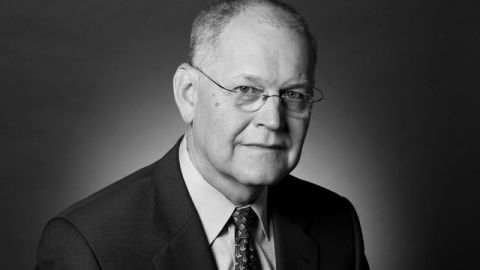
Shawn McMahon

Shawn McMahon: Economic security, on the household level, is having the resources to meet basic needs — most simply stated as health, safety and basic economic participation, such as being able to work, access to banking, etc. — without public or private assistance.

We first started to measure economic security — we originally called it self-sufficiency — in the 1990s during the welfare reform movement. At that time, the only measure of wellbeing available was the official federal poverty level. That measure, created in the 1960s, is very antiquated and it doesn’t tell us anything about people living $1 or $1,000 or $10,000 above the poverty line. It’s also not aspirational. It doesn’t tell us about the targets or the goals that we as a society (or the federal government) should have for people living under the federal poverty level. MORE

Blinding Us From Science

Science is under attack. With corporations manufacturing uncertainty to undermine studies that hurt their bottom lines and the sequester cutting billions in funding for scientific research, you’d think the American science community would be hunkered down in their labs avoiding outside interference at all costs.

A new project of the Union of Concerned Scientists (UCS), the Center for Science and Democracy, is encouraging scientists to do just the opposite. The center encourages scientists to speak out and help others to better understand scientific information and to distinguish evidence from political positioning. We spoke with the Center’s director Dr. Andrew Rosenberg by phone this week. This is an edited version of our conversation.

Theresa Riley: In Bill’s conversation with public health historians David Rosner and Gerald Markowitz, they talk about a “war on science” that is being waged by industries to prevent and weaken regulations. In Heads They Win, Tails We Lose, a report released last year, UCS investigators showed how widespread the practice is. What tactics do they use?

Dr. Andrew Rosenberg

Andrew Rosenberg: In the political arena, there are lots of avenues where corporate influence comes in. Sometimes it’s directly lobbying elected officials. For example, on fracking, Common Cause found that the industry has spent almost $750 million over the last decade lobbying to try to ensure that regulation isn’t increased, that the federal government stays out of fracking — even, to some extent, in the monitoring and evaluation of impacts of fracking. And that’s unfortunately a pretty common picture. On medical devices it’s a similar sum, $700 million, to lobby on behalf of medical devices and pharmaceuticals to try to keep the rules as business friendly as possible. People understand that there’s lobbying. I’m not sure they understand the magnitude. MORE

Whistleblowers: American Heroes?

The press, the public and democracy itself have always relied on people of conscience speaking out as witnesses of corruption, misconduct and the abuse of power. The whistleblower’s vital role is even protected by federal law. But the Obama administration has been waging what filmmaker Robert Greenwald calls a “war on whistleblowers,” particularly those accused of exposing information related to national security. His new film “War on Whistleblowers: Free Press and the National Security State,” tells the story of four government employees who, in the post 9/11 era, spoke out against official wrongdoing and paid a heavy price. We caught up with Greenwald to learn more.

First, watch the trailer:

Lauren Feeney: Introduce us to the whistleblowers featured in your film.

Robert Greenwald: The first is Franz Gayl, an amazing American hero who spoke up, took on the military industrial complex and was responsible for saving many, many lives by forcing the institutions to introduce the MRAP (Mine-Resistant Ambush Protected vehicle) in Iraq instead of what they had previously been using. By the soldiers’ admission and by quite a few others, this was literally a lifesaver of enormous importance.

The second whistleblower is Michael DeKort, who discovered that radios being put on Coast Guard boats were not waterproof, which is really hard to even believe.

The third whistleblower is Thomas Drake, who spoke out loudly about the fact that our phones were being tapped, and that there was surveillance software available that could have done a better job, a legal job, and a more inexpensive job that was not used because of a competing project. He was accused and cited under the Espionage Act.

And the fourth case is Tom Tamm, whose revelations were part of what led to the original New York Times story about the Bush administration’s warrantless wiretapping. He had worked for the FBI, and his father had worked there, and he lost his job and paid a tremendous price for speaking up.

Feeney: You call this a “war on whistleblowers.” Why the crackdown?

Greenwald: The national security state — the ideologies and institutions created by the 1947 National Security Act, like the CIA and the National Security Council — believes in all secrets, all the time, and is leading the charge for silence. It is important that the administration and citizens resist this pressure. The crackdown on the national security whistleblowers by the Obama administration is a cause of great concern and unhappiness for whistleblowers, reporters and transparency experts.

Feeney: What effect does this “war on whistleblowers” on our democracy?

Greenwald: The effect of silence and secrets is devastating. Think of all the important stories and issues that have been exposed only because of whistleblowers. We must fight hard to make sure that tradition is upheld. Our action guide tells you what you can do to protect whistleblowers and investigative reporters.


Robert Greenwald is an activist and filmmaker whose documentaries include Uncovered: The War on Iraq, Outfoxed: Rupert Murdoch’s War on Journalism and Koch Brothers Exposed.

Are Geeks the New Guardians of Our Civil Liberties?

Gabriella Coleman

Anonymous, the hacktivist collective that Fox News once called “the Internet hate machine” has undergone a dramatic rebranding in recent months. Once thought to be a public nuisance, their work seeking justice in the Steubenville rape case and other actions they’ve taken to improve society has earned them a new moniker: the “white knights of the digital realm.”

Gabriella Coleman is the Wolfe Chair in Scientific and Technological Literacy at Canada’s McGill University and one of the foremost experts on Anonymous. Trained as an anthropologist, she examines the ethics of online collaboration and the role of the law and digital media in sustaining various forms of political activism.

We caught up with Coleman earlier this month in Denver at the National Conference for Media Reform where she spoke on a panel that asked “Are Geeks the New Guardians of Our Civil Liberties?” She is the author of Coding Freedom and is currently working on a new book about Anonymous and digital activism.

Riley: Many people became more familiar with the world of hacking because of the tragic death of Aaron Swartz. How do you think his story may change, or has already changed, the perception of hackers?

Gabriella Coleman: Aaron Swartz considered himself both a hacker and an activist. He was also very involved in the free culture movement — Creative Commons — which drew inspiration from the hacker community to create licenses that could be used on other media, such as music and art software. In some ways he was the quintessential hacker, by which I mean extremely clever and bright. Folks like Tim Berners-Lee called him an ‘elder’ when he passed away. A lot of hackers are bright and precocious, but he pushed that envelope. He was a hacker who worked on technology, but he was also very committed to open access — and from a very young age, when he was 14 or 15. While hackers are often adept at programming at a young age, to be so politically inclined at that age is unusual, so he really stood out.

The reaction [to his death] from the hacker community was unlike anything I had ever seen. I remember very distinctly, because I was home on Twitter, and it was just this flood and outpouring. He wasn’t this hacker just breaking the law for the fun of it. He was very mindful as to why he did things, and he was very respected by a wide cohort of individuals. It really brought into relief the problems with the law, the Computer Fraud and Abuse Act, under which he was being tried. For a very long time, activists and lawyers have said the law’s too broad and vague, and this became a moment and cause by which to really make that utterly clear. There’s now a whole set of initiatives to finally reform the Computer Fraud and Abuse Act. MORE

Lisa Graves Updates Us on ALEC

Last fall, Moyers & Company aired the United States of ALEC, a report on the most influential corporate-funded political force most of America has never heard of — ALEC, the American Legislative Exchange Council. In statehouses around the country, hundreds of pieces of boilerplate ALEC legislation are proposed or enacted that would, among other things, dilute collective bargaining rights, make it harder for some Americans to vote, and limit corporate liability for harm caused to consumers — each accomplished without the public ever knowing who’s behind it.

The response from viewers has been amazing. We’ve received updates to our interactive map naming local legislators who are affiliated with ALEC, as well as hundreds of comments and emails about the revelations contained in the report. Lisa Graves, the executive director of the Center for Media and Democracy (CMD), one of the watchdog organizations keeping tabs on ALEC, recently visited our offices and updated us on what ALEC’s been up to lately.

Riley: On the PR Watch website last week, I saw that ALEC may be about to undergo a makeover, starting with its name. What happened?

Lisa Graves, Center for Media and Democracy

Lisa Graves: ALEC is urging its members to no longer use the acronym. In a note to ALEC legislators and private sector members, ALEC’s spokesman said: “You may have noticed we are limiting the use of the acronym ‘ALEC.’ Over the past year, the word ‘ALEC’ has been used to conjure up images of a distant, mysterious, Washington alphabet organization of unknown intentions,” which he says could not be further from the truth, adding that “the organization has refocused on the words ‘Exchange’ and ‘Council’ to emphasize our goal of a broad exchange of ideas to make government work better and more efficiently.” This re-branding is a classic PR technique. Big Tobacco used it to try to distance some of its brands with negative consumer users. MORE

Going to Bed Hungry

The United States is the world’s wealthiest nation, yet we still have families and children who don’t have enough to eat. We caught up with Joel Berg of NYC’s Coalition Against Hunger to learn what it means to be food insecure and what we can do to ensure that no child goes to bed hungry.

Theresa Riley: What does it mean to be “food insecure”? How many American children now live in “food insecure” households?

Joel Berg

Joel Berg: Food insecure means families don’t have enough money to regularly obtain all the food they need. It means they are rationing food and skipping meals. It means parents are going without food to feed their children. It means kids are missing breakfasts. And, ironically, because healthy food is usually more expensive than junk food, and because healthier options often don’t even exist in low-income neighborhoods, it means that food insecurity and obesity are flip sides of the same malnutrition coin, so food insecurity may actually increase a family’s chance of facing obesity and diabetes. Fifty million Americans, including nearly 17 million children, now live in food insecure homes. MORE

How Worker-Owned Companies Work

Economist Richard Wolff is a proponent of democracy at work: an alternative capitalism that thrives on workers directing their own workplaces. In the documentary film Shift Change, producers Mark Dworkin and Melissa Young tell the stories of successful cooperative businesses from Spain to San Francisco. We caught up with Dworkin and Young to find out what makes cooperative businesses work.

Theresa Riley: What drew you to this topic as filmmakers? Why did you want to make this film?

Mark Dworkin and Melissa Young

Mark Dworkin and Melissa Young

Mark Dworkin and Melissa Young: As filmmakers we don’t just expose problems. We want to help people find solutions. In 2002 we were in Argentina at the height of their economic crisis, and in hundreds of workplaces which had closed, workers took over the company, went back to work, and made a go of it. These examples made quite an impression on us, and we featured their stories in two films: Argentina — Hope in Hard Times and Argentina Turning Around. A friend who saw the Argentina documentaries suggested that we learn more about the Mondragon cooperatives in the Basque Country of Spain. When we did, we were moved and inspired by this successful model of worker ownership and its potential to change the culture of work — not just in Spain but around the world. Our investigations revealed that there are hundreds of thriving worker cooperatives that promote economic democracy right here in North America, but they are little known.

Riley: How many businesses in America are worker-owned?

Dworkin and Young: Employee ownership in the U.S. is much more widespread than usually understood, with at least 11,000 such businesses in operation. Many are Employee Stock Ownership Plans or ESOPs, where employees own part or all of the company. Introduced under President Nixon, this is one way for private companies to transition to employee ownership. ESOPs may or may not be democratic and participatory places to work. Worker cooperatives are both owned and managed by their workers — one worker, one vote. According to the U.S. Federation of Worker Cooperatives, currently there are about 400 worker cooperatives in the U.S. They operate many types of businesses, mainly services, and are growing especially among Latino immigrants and in working class communities. MORE

Don’t Count on Dodd-Frank… Yet

Almost three years after President Obama signed the Dodd–Frank Wall Street Reform and Consumer Protection Act into law, few of its provisions have actually come into effect. Thanks in part to the banking lobby, the process is stuck in what The Washington Monthly calls “the seventh circle of bureaucratic hell.” We checked in with Economist Simon Johnson to find out where things stand and whether we should be worried.

Simon Johnson. Photo credit: Robin Holland

Lauren Feeney: What’s the current status of the Dodd-Frank Act?

Simon Johnson: Implementation of the Dodd-Frank act has been painfully slow – and much slower than anyone imagined when the legislation passed in the summer of 2010.

The good news is that efforts to repeal Dodd-Frank have largely, although not completely, run out of steam.

Feeney: Why is progress so slow?

Johnson: The financial sector is a very powerful lobby. They have many friends on Capitol Hill and some parts of our country’s regulatory apparatus remained unduly captivated, if not captured, by the mystique of mathematical finance.

Feeney: The Volcker Rule, one of the key components of Dodd Frank, was supposed to go into effect in July 2012. It’s still not in place. What’s the holdup?

Johnson: The lobby.

Feeney: What are some of the regulatory tools that are already available under Dodd Frank, and how have they been used so far?

Johnson: The Federal Reserve acquired considerable powers under Dodd-Frank, particularly to change practices that it regards as dangerous to the system as a whole. There is now a healthy debate within the Fed about whether and when it can use these powers. Unfortunately, the most powerful officials are – so far – reluctant to act.

Feeney: What important tools are we still waiting for?

Johnson: How much time do you have?

Detailed rules for derivatives, sensible thinking on bank capital, rules for measuring risk, meaningful living wills, a resolution procedure for megabanks that would work across borders, clarity on how foreign subsidiaries will be regulated.

Dodd-Frank stipulates that the Board of Governors should have a new vice-chairman for supervision. It is shocking that, nearly three years after Dodd-Frank, no one has even been nominated. I strongly recommend that the president ask Sheila Bair, former chair of the FDIC, to fill this position.

And while you are waiting for officials to act, I strongly recommend that you read The Bankers’ New Clothes by Anat Admati and Martin Hellwig. The bankers are naked, intellectually speaking. Admati and Hellwig lay out a compelling agenda. Read the book and send a copy to your senator.

Feeney: Is our financial system still at risk as we wait for these rules to be put into place?

Johnson: Yes, our financial system – and the global financial system – remains vulnerable. This is not to say that another crisis is imminent, but rather that many of our weaknesses have not been addressed. As the credit cycle develops and investors again become optimistic, we should expect trouble.

The most glaring example is that we have not ended the “too big to fail” problem. Our largest financial institutions receive implicit government subsidies in the form of downside protection. When things go well, their executives and traders get the upside. When things go badly… of course, you know who pays that cost.

Simon Johnson is a former chief economist of the International Monetary Fund and now a professor at MIT’s Sloan School of Management and senior fellow at the Peterson Institute for International Economics. His most recent book is White House Burning: The Founding Fathers, Our National Debt, and Why It Matters to You. Johnson spoke with Bill Moyers in May about JP Morgan’s multi-billion dollar loss . 

Alex Steffen on Carbon-Zero Cities

In 2003, environmental journalist Alex Steffen and Jamais Cascio started a blog called Worldchanging that focused on innovative solutions to the planet’s problems. The blog attracted a global audience and became one of the most trafficked sustainability sites on the Internet. Wired columnist Bruce Sterling called it “the most important website on the planet” and it won numerous awards, including two Webbys, before shutting down in 2010 due to lack of funding. Since then, the site has merged with Architecture for Humanity and will re-launch in October of this year.

Alex Steffen recently published an ebook, Carbon Zero: Imagining Cities That Can Save the Planet, that explores the technology and design innovations that could “transform our cities into low-carbon engines of prosperity.” Earth Day founder Denis Hayes says that Steffen “may be the world’s boldest, most innovative thinker about future cities.” We caught up with him to talk about some of the ideas in his book. This is an edited version of our conversation.

Theresa Riley: What inspired you to write Carbon Zero?

Alex Steffen

Alex Steffen: Having paid attention to the debate about climate change as it’s emerged over the last two decades, it’s felt to me that we are approaching the problem of climate change with unclear eyes. Because much, though not all, of climate change is caused by the burning of fossil fuels, we have this tendency to think that the solution is to replace fossil fuels. And certainly fossil fuels are bad. They’re things we should be moving away from as quickly as possible. But the idea that we are going to be able to take our entire society as it currently works and simply change the source of energy and make it sustainable is not actually congruent with reality.

What I wanted to do was to take a different approach than the normal climate change approach of, “Let’s talk about solar, wind and wave,” and instead talk about how we use energy. Because the reality is that how we use energy is not a given. There are a lot of different ways of building a prosperous society and some of them use much less energy than others. And it is possible and more practical to talk about rebuilding systems to use much less energy than it is to think about trying to meet greater demands of energy through clean energy alone.

Riley: Why the focus on cities?

Steffen: There are three reasons. We are already an overwhelmingly urban species. The percentage of humanity that’s predicted to live within one day’s travel of a city rises up to 95 percent by 2050, which means that almost everybody will be living either in a city or within urban systems. If you’re going to solve a problem, you might as well solve the problem that most of humanity is having, right?

Secondly, cities are themselves the center point around which all of these systems turn. Cities are responsible for the vast majority of the creation of the economy. They’re also places into which we pour the vast majority of resources, the vast majority of energy and the places where a huge percentage of the decisions about how systems are built and how products designed, etc., happen. So if you change cities, you actually change all of those other systems as well.

And on top of that, cities are this weird creature: they’re big enough to be very important but they’re also small enough for little groups of people to make a difference. MORE

Transparency in Government: Let the Sun Shine In

Last year, The Sunlight Foundation’s Executive Director Ellen Miller shared her insights on campaign finance transparency and the value of data journalism in our democracy. This week is Sunshine Week, an annual national initiative that promotes open government and the public’s right to know what our government is doing, and why. We checked in with Miller to find out what her team is prioritizing in the year ahead. This is an edited version of that conversation.

BillMoyers.com: What are your biggest transparency concerns for 2013?

Ellen Miller

Ellen Miller: Moving forward to fulfill the promises that the Obama Administration has made with respect to transparency for open data. We want to see the agencies putting out more data that citizens can use, and we want to see that initiative spread to state capitals and to cities all around the country.

This is the age of transparency, and there’s no better time than Sunshine Week to remember that, to figure out what kind of data we want, how citizens will use it and make sure that it’s in their hands. Sunlight’s core interest is to use this data to hold government at all levels accountable, to enable citizens to ask the kinds of questions they want to ask about why a legislator did this or why they voted that way or why they took political money from that interest. Without access to data, they can’t possibly ask these kinds of questions. Transparency is a key ingredient of what our founders intended when they talked about a free and open and democratic society.

Are there particular sets of data that you’re hoping the Administration will make public in the coming year/years?

Miller: We asked the Administration four years ago to give us an audit of the data that’s collected by each government agency. And we never got that. So we’re in a situation where we don’t know what we don’t know. There has been some great investigative journalism that uses government data, so we know there could be public access to so much more. For example, data from the Occupational Safety and Health Administration details employer-specific information about occupational fatalities. This data, intended to help employers identify dangerous conditions and ‘take steps to improve safety and prevent future accidents,’ has also allowed investigative journalists to expose unsafe conditions and tell heartbreaking stories. The Center for Public Integrity and Huffington Post took advantage of the OSHA data in a series of articles that expose unsafe working conditions.

This is the kind of data we told the Administration we’re interested in because it can be used to hold those who report to government accountable. But without having an actual list of what corporations have to report to the federal agencies that regulate them, it’s pretty hard to establish a firm list.

A lot of that information would be available via a FOIA (Freedom of Information Act) request now, but you want it to be available in a more accessible form, is that right?

Miller: This Administration does not have a very good record when it comes to granting FOIA requests. And relying on FOIA to make public information accessible is just wrong. FOIA puts the burden on citizens to ask for the information, and that’s the wrong approach for a democracy. It’s also outdated. In the times in which we live, it needs to be online.

Transparency is a key ingredient of what our founders intended when they talked about a free and open and democratic society.
Furthermore, we want to see that data available in as real time as possible, so when the information is reported to any agency or department, it ought to be turned around and made accessible to the public very, very quickly — within 24 hours.

Senator Jon Tester is introducing a bill this week called the Public Online Information Act. Sunlight helped inform the content of this bill. It would require government to make any information that is required to be made public to be publicly available online. We couldn’t be more pleased that Senator Tester has reintroduced this during Sunshine Week, because it really is a statement about how important it is to have public information publicly accessible.

Can you tell us about the transparency report card released on Monday that assesses government disclosure at the state level. How did the states do?

Miller: It was not a pretty picture. There were eight [states] that got an A and six that got Fs, including my home state of Kentucky. (Read the report.) Evaluated across six criteria, the Sunlight Foundation developed a scorecard and letter grades for all 50 states and the District of Columbia. The Transparency Report Card judges legislative websites in relation to how government information is publicly available. Factors include: completeness, timeliness, ease of electronic access, machine readability, use of commonly owned standards and permanence. Most state legislatures are generally behind the technological curve, and that has negative implications for government oversight. However, our experience working with many in government shows there is an appetite to modernize disclosure practices, and fortunately, cash-strapped state legislatures do not have to employ expensive services to follow these open data principles.

If you were to give the Obama Administration a letter grade for transparency, perhaps based on similar standards, could you say what it would be?

Miller: We can’t. The situation is so complex and it varies so much from agency to agency, much less department to department, that there would be no way to develop even a simple schema to evaluate how well they are doing. We have always said that the promises made by the Administration four years ago were quite extraordinary, and we have been very clear that we have been quite disappointed in their implementation. So across the federal side of things, there’s no question that there’s a lot to be done.

One of the concerns that we have about the president specifically is the lack of real-time transparency for his c4, Organizing for Action (OFA). The fact that, for example, the president spoke to an unknown number of people who gave $50,000 [to OFA] on Wednesday night is concerning to us. There’s no reason why we shouldn’t know who those people are in real time as they make these contributions. There was a lot of pressure put in the last month or so on OFA to make this information available. Initially they said they would not make any of the donors available. They will now, but only on a quarterly basis, which is too late for understanding how influence might be applied in a meeting tomorrow.

What campaign finance reform policy changes are you hoping for in time for the 2014 elections?

Miller: The two most important things for us are to get real-time disclosure of the super PAC money and the dark money, the c4 money. To us, that’s what the Supreme Court said should be done in 2010, and it still hasn’t been done and there doesn’t seem to be a lot of political will on behalf of either the Republicans or the Democrats to do it. But we think that’s critically important.

And the second piece is to get real-time disclosure of lobbyist information — who are they visiting and what are they discussing. Those are the two most critical pieces of information that impact the influence industry in Washington.

Your organization is always coming out with amazing new tools and new sites and apps to help citizens and journalists understand what our government is up to. Can you give us a preview of wthe new tools, apps and websites you have in the works for the next year?

Miller: We’re going to start improving and expanding some of what we already have that we know is working quite well, like Influence Explorer: the data actually creates a narrative, looking at the state and federal contributions and the federal lobbying, and the grants and contracts that a particular corporation might get.

Another one of these sites is called Scout, which is a legislative alert system. If you’re following the issue of immigration, you can get an alert about every bill that’s introduced at the state level or at the federal level, or every regulation that is pending or issued that has the word ‘immigration’ in it. So this is an unbelievable resource tool for journalists and for issue activists.

We’ll also be continuing to improve this site called Docket Wrench, that lets you look at the provenance of federal regulations. You can see how many comments there have been on a particular regulation and you can compare them and figure out whether there’s actually one comment or whether there’s 60 of the same comment. It shows you visually who’s influencing the rulemaking that happens after a law is passed.

Page 1 of 812345...Last »