









Group Think: The opposite of traditional ''groupthink,'' our Group Think poses one question to a variety of smart thinkers for insightful perspectives on relevant issues.

American Statecraft and Military Spending

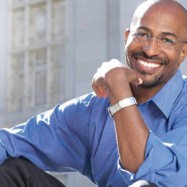
Andrew Bacevich. Photo credit: Dale Robbins

Foreign policy barely figured as a factor in the presidential campaign. So although President Obama’s victory renews his mandate to govern, it signifies little in terms specifying an azimuth for American statecraft. The contrast with 2008 is striking: In that election, by choosing Obama over John McCain, Americans were rendering a verdict on the Iraq War. They wanted to be done with it.

As a consequence, within limits, the president finds himself in a position to exercise considerable latitude. Prominent among those limits is the Afghanistan War. On the campaign trail, both Obama and his opponent had agreed on the need to end the U. S. combat role there by the end of 2014. Barring truly unexpected developments, the president will find himself obliged to deliver on that promise.

When that war finally ends, as part of a larger effort to reduce the federal deficit, the president will follow through on his inclination to make modest cuts in military spending. Hawks will howl that he is denuding defense, but the charge won’t stick. The fact is that Obama himself is a hawk, as his propensity to use armed force testifies.

By all rights, the presidential campaign ought to have provided the opportunity to debate how and why and where the United States today uses force. During his first term, Obama abandoned his predecessor’s inclination to invade and occupy countries with expectations of transforming them. Instead, he instituted a policy of killing individuals he decides to kill, wherever they might happen to be found, relying on missile-firing drones or commando raids to do the trick. Targeted assassination has now emerged as America’s new M. O. A serious presidential campaign might have examined the legal and moral issues raised by this new tactic. It also might have assessed their efficacy: Are such attacks increasing or reducing anti-Americanism in the Islamic world? Alas, the campaign did none of these things and in that sense rates as a missed opportunity.


Andrew Bacevich last visited Moyers & Company to talk about the changing military mindset in March of this year. Watch video »

Bacevich is a professor of history and international relations at Boston University. A graduate of the U.S. Military Academy, he received his Ph.D. in American Diplomatic History from Princeton University. Before joining the faculty of Boston University, he taught at West Point and Johns Hopkins University.

BillMoyers.com encourages conversation and debate around issues, events and ideas related to content on Moyers & Company and the BillMoyers.com website.

  • The editorial staff reserves the right to take down comments it deems inappropriate.
  • Profanity, personal attacks, hate speech, off-topic posts, advertisements and spam will not be tolerated.
  • Do not intentionally make false or misleading statements, impersonate someone else, break the law, or condone or encourage unlawful activity.

If your comments consistently or intentionally make this community a less civil and enjoyable place to be, you and your comments will be excluded from it.

We need your help with this. If you feel a post is not in line with the comment policy, please flag it so that we can take a look. Comments and questions about our policy are welcome. Please send an email to feedback@billmoyers.com

Find out more about BillMoyers.com's privacy policy and terms of service.

  • http://twitter.com/hoot1234 hoot

    I always listen carefully when Andrew Bacevich speaks military matters, because I know he has something important to say.

  • Anonymous

    A very important message that applies to my country, the UK, as much as the US. Our military should be primarily for defence – it is a long time since that was the case here.

  • Anonymous

    To our collective detriment, Bacevich does not have the audience he deserves. Possible the most insightful and accurate analyst on the topic of American militarism and the associated effects on foreign policy from after WW2 to the present.

  • A.O.W.M.

    Thanks for your opinion, Mr. Bacevich. The unfortunate thing about drone attacks and (to a lesser extent) commando raids is, there’s no way a news agency can embed a reporter on such endeavors, so they don’t make a similar impression on the news as, say, Operation Desert Storm. We all have to start noticing things a bit more, I think!

  • http://www.facebook.com/melissa.lavabre Melissa Lavabre

    Chilling analysis! Has it ever been in the U.S.’s interest to reduce anti-Americanism though? I would strongly disagree with you on the assumption that G.W. Bush or Bill
    Clinton or any of the other predecessors had any intention of “transforming” any country!

    I’m not sure Obama is any more hawkish than the past U.S. Presidents… I agree with you that Obama is a hawk (and I would mention Guantanamo Bay and the Indefinite Detention Act to further support that) but he is just one in a long lineage…
    War is a business and war is a legacy. Perhaps it is just a human trait. (And perhaps not!) What nation doesn’t have armies, what ruler doesn’t wage a war? And the U.S. clearly is an empire that must continue to assert its dominance in all sorts of way, economically, culturally, militaristically, if it wants to retain its powerful status. Besides, armies give jobs to the soldiers and the weapon industry, it recycles some nuclear waste, and imports it too, favoring international exchange… The industries of war don’t want to lose their vitality!

    Clearly, the U.S. presently stands as a merciless warmonger, but I’d say it is nothing
    new! It was after all founded by people who attacked savages with weapons much more destructive than those of their enemies… The guns of yore decimated nations yet were nothing compared to our new weapons of mass destruction! So you see, it’s been a long improvement. The other tactic inherited is to wage distant wars, just the same way America was built, through colonizing, as far away from the mainland as possible.

    The U.S. has the strategic advantage of being some sort of a natural gigantic island fortress, protected by two wide oceans on each side. It doesn’t mess with its neighbors too much (at least we only hear of covert operations long after they have
    been carried out – by the way, if I recall, Latin America was not once mentioned in any of the debates) since it is safer to wage wars far away. Another advantage to keeping wars on faraway lands is to keep the American people somewhat sedated. War is lived as something distant and abstract, like a video game or an entertaining movie. Out
    of sight, out of mind. People are also too caught up in their own misery of American survival so that they cannot see anything further than their poverty. (Yet our poverty is sooo relative, are we not among the richest nation on Earth? But this is a whole other topic that would probably lead me to suggest a whole new evaluation of currency and a new concept of riches).

    Anyway, I am far from well-versed in foreign affairs, alas, and politics at large really…
    I have to say I was shocked by both candidates when it came to defending the great America blessed by God. They both responded with such primary patriotic aggressive brutality! But correct me if I’m wrong, Romney spoke of waging more fronts and showing them not to mess with America, while Obama spoke of bringing the troops home for a reconstruction.

    There are other topics that were blatantly lacking, such as immigration, the war on drugs, or our extremely high imprisonment rate…

  • Randy

    Unfortunately it is the same old Washington Rules. Reducing our unnecessary military spending and cost around the world should be at the top of the list in reducing our spending problems. Why do we maintain large military forces in the UK, Japan and Okinawa or Germany. Cold War mentality does very little but break the bank. Will the rules change before it is too late.

  • SteveW

    500 billion a year for defense is plenty, beyond that is just plain crony capitalism simple as that.

  • http://www.facebook.com/profile.php?id=664746728 Winter Green

    I love the conversation that comes from Bill and his guests.

  • Anonymous

    I complained loudly when these extra powers were granted the Office of the President through the AUMF legislation and the conservative forums I posted in ran me out with cries of traitor and RINO. Now that the Democratic president has (and is exercising) these powers, it’s conservative commenting raising a big stink about them, but they”re also joined by MANY on the Liberal side. This is what I abhor about today’s republicans, it’s either lock step vocal support or GTFO. You don’t get that from the Democratic side, dissenting opinions aren’t drowned out except for the most partisan forums. I hated these powers when Bush had them, I do not like them any more now that Obama has them. But from my perspective, the responsibility rests with congress to reign them in